If you have ever read a health magazine, visited a gym, or tried to improve your diet, you have heard about protein. It is the star of the nutrition world, often praised as the key to weight loss, muscle gain, and overall vitality.
But beyond the marketing of protein bars and shakes, what exactly is it? Why does your body need it so much? Let’s simplify things and look at the basics of protein.
What is Protein, Anyway? Think of your body as a house under constant renovation. Old structures are torn down, and new ones need to be built every day. Protein provides the materials for that construction. Scientifically, protein is a macronutrient, which means you need it in large amounts for life. It's not just one solid substance; it consists of long chains of smaller units called amino acids.
There are 20 different amino acids that combine like letters in an alphabet to form thousands of proteins in your body. These proteins make up your muscles, skin, hair, and bones. They also create the enzymes that help digest your food, the antibodies that fight infections, and hormones like insulin. Without enough protein, the construction work in your body stop.

The Types: Complete vs. Incomplete Protein
Not all protein sources are created equal. The quality of a protein is determined by its "amino acid profile."
Here is the crucial part: Out of the 20 amino acids your body needs, it can create 11 of them internally. The remaining 9 are known as Essential Amino Acids. You must get these 9 from the food you eat, because your body cannot manufacture them.
Based on these essential nine, we categorize protein sources into two main types:
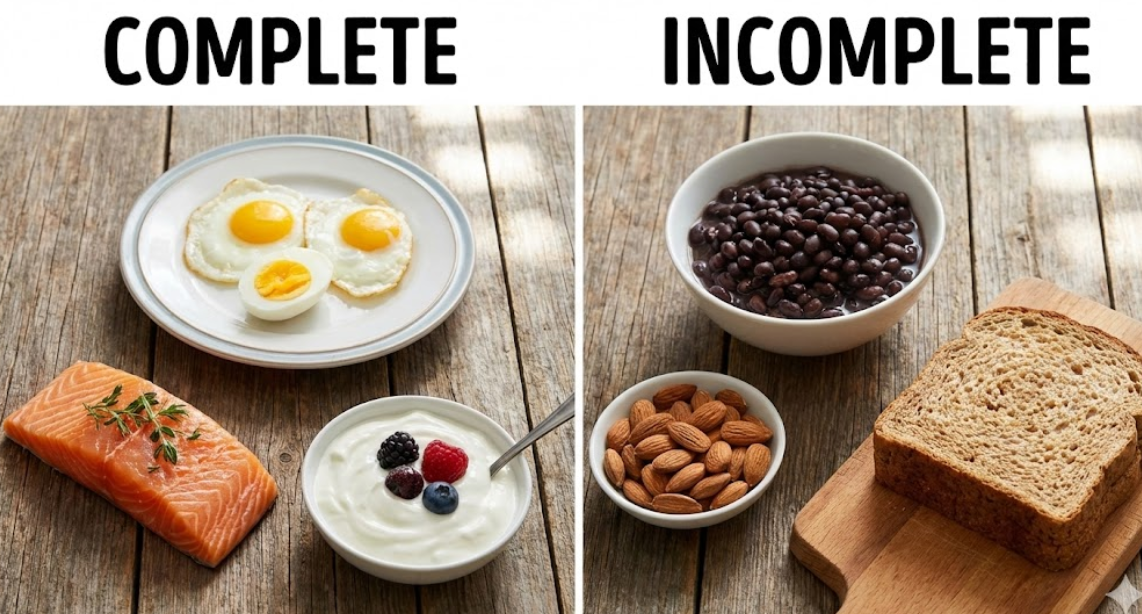
1. Complete Proteins
A "complete" protein source contains all nine essential amino acids in adequate amounts. These are mostly animal-based foods. They are a "one-stop shop" for your body’s building needs.
- Examples: Meat, poultry, fish, eggs, and dairy.
- The Plant Exceptions: There are a few rare plant-based complete proteins, most notably soy (tofu, edamame, tempeh) and quinoa.
2. Incomplete Proteins
An "incomplete" protein source is low in, or missing, one or more of the nine essential amino acids. Most plant-based sources fall into this category.
- Examples: Beans, lentils, nuts, seeds, and most grains.
The "Protein Combining" Myth: Don't worry—you do not need to eat a complete protein at every single meal. Years ago, people thought vegetarians had to carefully combine foods (like rice and beans) at the same sitting to get a "complete" protein. We now know that if you eat a variety of plant proteins throughout the entire day, your body is smart enough to pool those amino acids together to get what it needs.
Top Sources of Protein
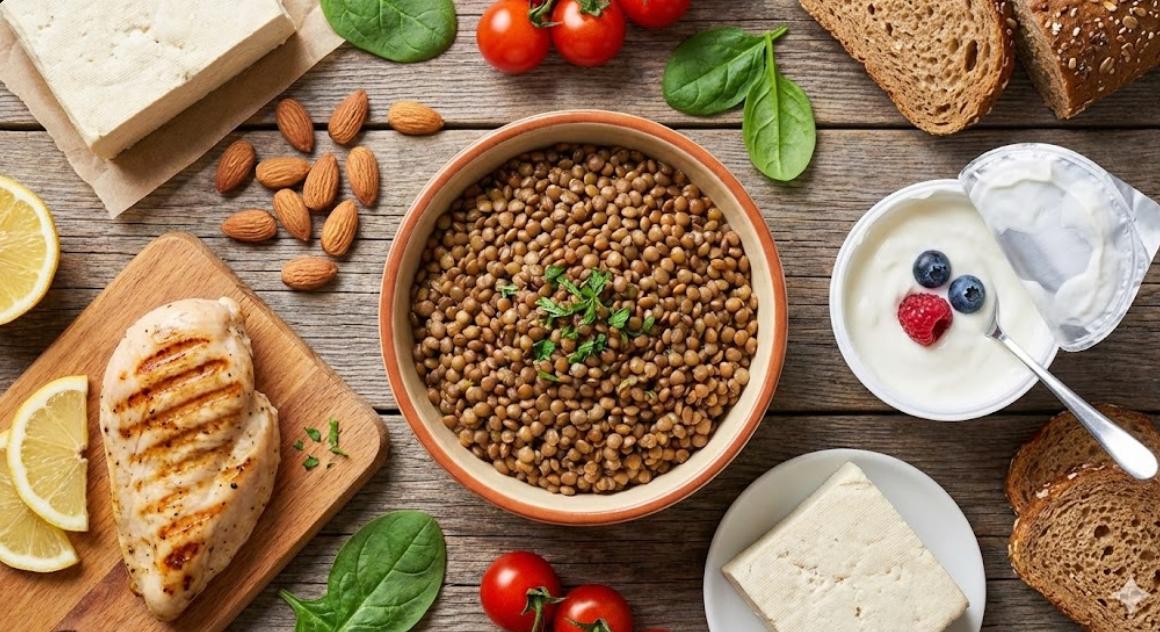
Whether you are a strict carnivore, a flexible vegetarian, or a dedicated vegan, there are abundant sources of protein available.
Animal-Based Sources (High Bioavailability)
Animal proteins are generally digested and absorbed very easily by the human body.
- Eggs: Often called the "perfect protein," eggs are incredibly nutrient-dense.
- Chicken and Turkey Breast: Lean staples for high protein content with relatively lower fat.
- Fish and Seafood: Salmon, tuna, and shrimp provide protein alongside heart-healthy Omega-3 fatty acids.
- Lean Beef: A potent source of protein, iron, and B vitamins.
- Greek Yogurt & Cottage Cheese: Dairy options that are packed with slow-digesting protein (great for keeping you full).
Plant-Based Sources (Fiber-Rich)
Plant proteins are fantastic because they almost always come packaged with fiber, vitamins, and no cholesterol.
- Legumes (Lentils, Chickpeas, Black Beans): The powerhouse of plant-based eating. They are cheap, versatile, and filling.
- Tofu and Edamame: Complete soy-based proteins that are incredibly versatile in cooking.
- Nuts and Seeds: Almonds, walnuts, chia seeds, hemp seeds, and pumpkin seeds are excellent for snacking or topping salads.
- Whole Grains: Quinoa, farro, and oats contribute surprising amounts of protein to a meal.
The Bottom Line
Protein isn't just about building huge biceps; it’s about maintaining the basic structure and function of your body.
You don't need to obsess over every gram, but you should aim to include a quality source of protein in every major meal. Whether that’s an omelet for breakfast, a lentil soup for lunch, or grilled fish for dinner, prioritizing these "building blocks" is one of the simplest steps you can take toward better long-term health.